

Dr. Shadi Hamid
Senior Fellow and Co-Founder
Dr. Shadi Hamid is a columnist and former editorial board member at The Washington Post and a Senior Research Fellow at Georgetown University. Previously, he was a senior fellow at the Brookings Institution and a contributing writer at The Atlantic. Hamid is the author of several books, including most recently The Problem of Democracy. His previous book Islamic Exceptionalism: How the Struggle Over Islam is Reshaping the World was shortlisted for the 2017 Lionel Gelber Prize for best book on foreign affairs. His forthcoming book Exceptional: The Case for American Power will be published in 2025 by Simon & Schuster. In 2019, Hamid was named one of the world’s top 50 thinkers by Prospect magazine. He is also the co-founder of Wisdom of Crowds, a podcast, newsletter, and debate platform. Hamid received his B.S. and M.A. from Georgetown University’s School of Foreign Service and his Ph.D. in political science from Oxford University, where he was a Marshall Scholar.
Learn more about Hamid’s work at
washingtonpost.com/people/shadi-hamid


Dr. Matthew Kaemingk
Senior Fellow and Co-Founder
Dr. Matthew Kaemingk is a Christian ethicist and public theologian. He serves as Professor of Public Theology at Theological University Utrecht and Senior Research Fellow at Georgetown University. Kaemingk is an award-winning author and frequent public speaker for universities, think tanks, and religious organizations interested in exploring the intersection between religion, politics, and deep difference. He is the author and editor of several books on faith and public life including Christian Hospitality and Muslim Immigration in an Age of Fear (Eerdmans, 2018) and Reformed Public Theology (2021). In addition to writing and speaking, Kaemingk co-hosts an innovative new podcast on religion and politics alongside Dr. Shadi Hamid called Zealots at the Gate. Kaemingk is a Fulbright scholar and holds a doctoral degree in Systematic Theology from the Vrije Universiteit in Amsterdam and Christian Ethics from Fuller Theological Seminary. In addition to his academic writing some of Kaemingk’s more popular level articles can be found in Christianity Today, Comment Magazine, and Plough.
Learn more about Kaemingk’s work at matthewkaemingk.com
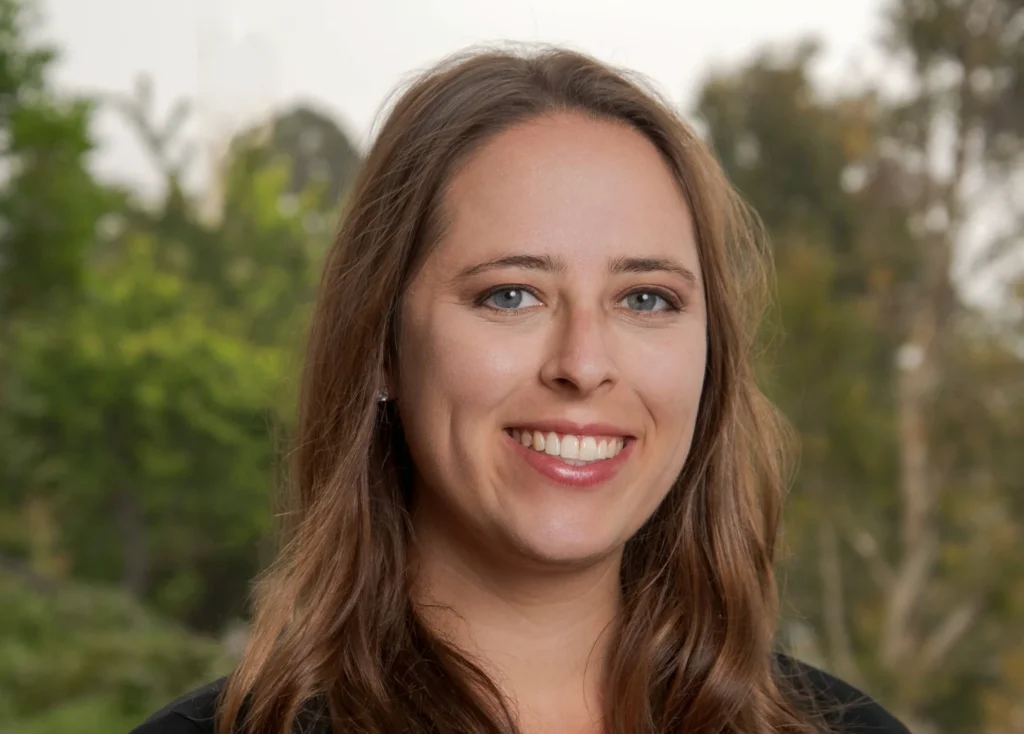
Rachel Collins
Director of Programming and Operations
Rachel Collins is a leader in higher education, chaplain, and researcher whose work focuses on faith, pluralism, and the formation of emerging leaders. She serves as the Director of Programming and Operations for the Faith and Future of Democracy Initiative, where she provides strategic and operational leadership, as well as, spiritual accompaniment to multi-faith conversations and spaces.
Rachel has extensive experience in university ministry and chaplaincy, including pastoral care, programming, leadership development, and institutional collaboration in multi-faith higher education settings. In addition to her role with the initiative, she also serves as adjunct faculty at Azusa Pacific University and Abilene Christian University. Her latest research on emerging adult faith development has been published in Discernment a Journal of Practical Theology.
Rachel holds a Masters in Divinity from Fuller Theological Seminary with an emphasis in Christian Ethics. She also holds a Masters in Business Administration from Pepperdine University and a Certificate in Dispute Resolution through the Caruso School of Law.
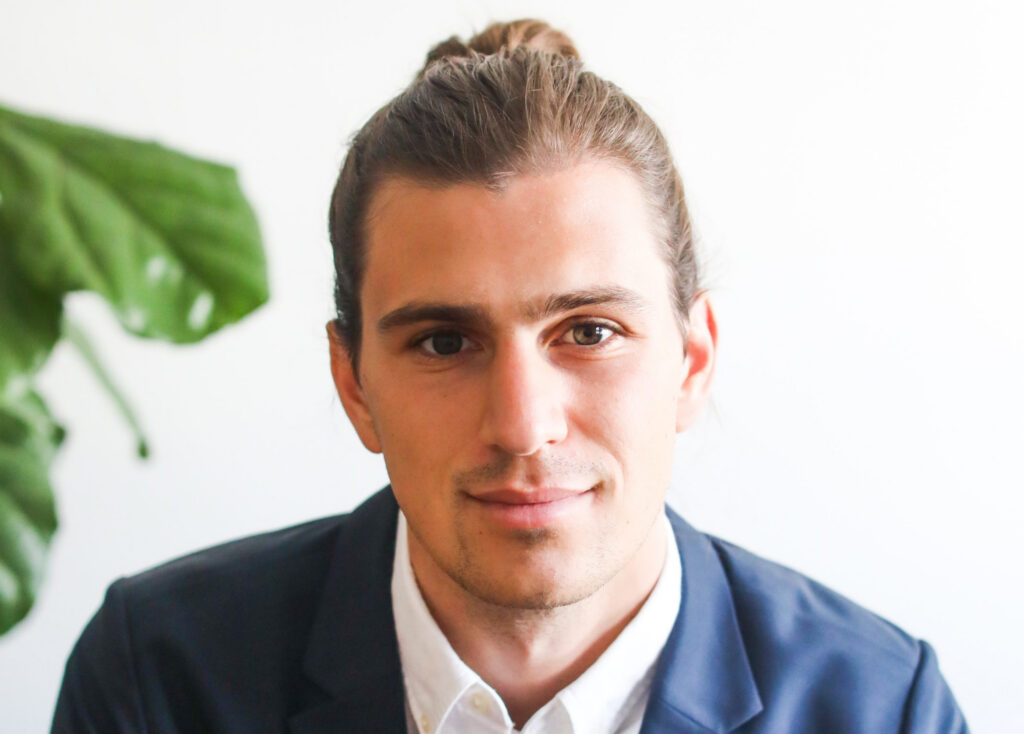
Dr. Chris Stackaruk
ACMCU Fellow and Consultant
Dr. Chris Stackaruk is a researcher and entrepreneur and an ACMCU Fellow. He also consults on strategy and development with Faith and Future of the Democracy Initiative. He holds a PhD from the University of Toronto, where his research recovered the contributions of Middle Eastern and North African Catholic bishops to Nostra Aetate, the Second Vatican Council’s declaration on the Church’s relationship to non-Christian religions.
Chris co-founded Neighborly Faith which, since 2016, has connected evangelical college students with their Muslim peers across the United States and Canada. He led its media strategy and development, including nationwide studies on Christian nationalism and evangelical civic engagement. His work has been covered by Newsweek, Religion News Service, and Christianity Today.
FAQ
We encourage applications from emerging scholars, activists, and leaders working at the intersection of religion, politics, and pluralism. Successful applicants will be able to demonstrate:
- A deep commitment to academic excellence. Their demonstrated capacity for research and writing competency should be at a high level. At minimum, prospective fellows should have completed a master’s degree in a discipline related to religion, politics,, ethics, or the social sciences.
- A deep commitment to the beliefs and practices of either the Islamic or the Christian faith. We seek applicants for whom faith is a central, not ancillary, part of their personal, professional, and academic identity.
- A deep commitment to working across serious religious, cultural, and political differences. Successful applicants will need to demonstrate their past experience and future willingness to work alongside those who do not share their core commitments.
- A deep commitment to public thought leadership. While serious academic work is encouraged, successful applicants will need to demonstrate a commitment to writing and speaking for a general audience.
A few other notes:
- While our primary interest is in serving American citizens, we are open to considering international applicants.
- There is no specific age restriction for applicants. That said, our preference is to serve leaders nearer the beginning of their respective careers in the academy and public life.
- Fellows receive a groundbreaking multi-faith and international learning experience. Over the course of two years, they will have the opportunity to meet and learn from a variety of world-class thought leaders working at the intersection of religion, politics, and pluralism.
- Fellows will also have the opportunity to build meaningful professional and personal relationships with a network of emerging Muslim and Christian leaders doing cutting-edge research and writing on issues related to faith, politics, and democracy.
- Fellows will receive mentoring and support in their own professional growth as a public thought leader in the fields of religion, politics, and pluralism. Each fellow will also receive critical and constructive feedback on their ideas and writing from their peers and mentors.
- Each fellow will receive a $15,000 stipend for their active participation in the program.
- Each fellow will have their travel, food, and lodging expenses covered for all four gatherings.
- Each fellow will have the opportunity to apply for a small grant whereby they can organize their own public event around their respective ideas and work.
The fellowship requires active participation and contribution to the program for a total of two years (Fall 2025- Spring 2027) :
- Fellows are expected to physically attend four physical gatherings over the course of two years. Our two domestic gatherings will be in Washington DC and Los Angeles. Our two international gatherings will be in foreign locations that will be determined at a later date. These will be international cities where the questions of pluralism and the relationship between Christianity and Islam are of particular importance. Our domestic gatherings will last four days and our international gatherings will last six. Fellows are expected to attend and participate in the entirety of these gatherings. The first gathering is scheduled for Dec 2-5, 2025 in Los Angeles, CA.
- Fellows will complete 2,000 pages of reading on the intersection of religion, politics, and pluralism over the two year program. Fellows will be expected to deeply engage Islamic, Christian, and secular texts in their reading and discussion.
- Each fellow will write two original essays for publication on issues related to faith, politics, and pluralism. Each fellow will also be expected to collaborate with a fellow from a different faith tradition on a co-authored essay.
Who are the instructors?
- This program is directed by Dr. Shadi Hamid and Dr. Matthew Kaemingk. Together they serve as the primary instructors and mentors for the fellows. You can learn more about their research, writing, and mutual podcast by clicking here.
- During each gathering fellows will also learn from a variety of world-class leaders and scholars working at the intersection of religion, public policy, and pluralism.
The Faith and Future of Democracy Initiative

A catalyst for Christian+Muslim discourse.
